
 Asset Publisher
Polish hit
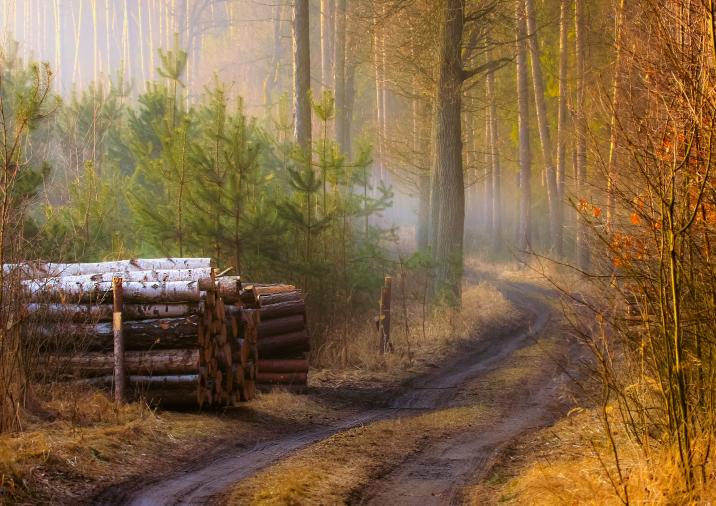
Polish products made of wood – furniture, window and door frames, yachts or paper and packages – these are real hits of the market.
Our country is the is the 10 largest producer of furniture and the 4 largest furniture exporter in the world. Wood industry sells abroad goods of its approximate value of 45 million zl annually, what constitutes 10 % of the whole Polish export. The measurement of the essential role of forestry and timber based sector in our management is that, it works out about 2 % of GDP (Gross Domestic Product). Not only it gives work to thousands of people, but it is also an engine of investment and of development of innovative technologies. From the beginning of transformation, it drew foreign capital of its value over 30 million zl.
Forest gives work
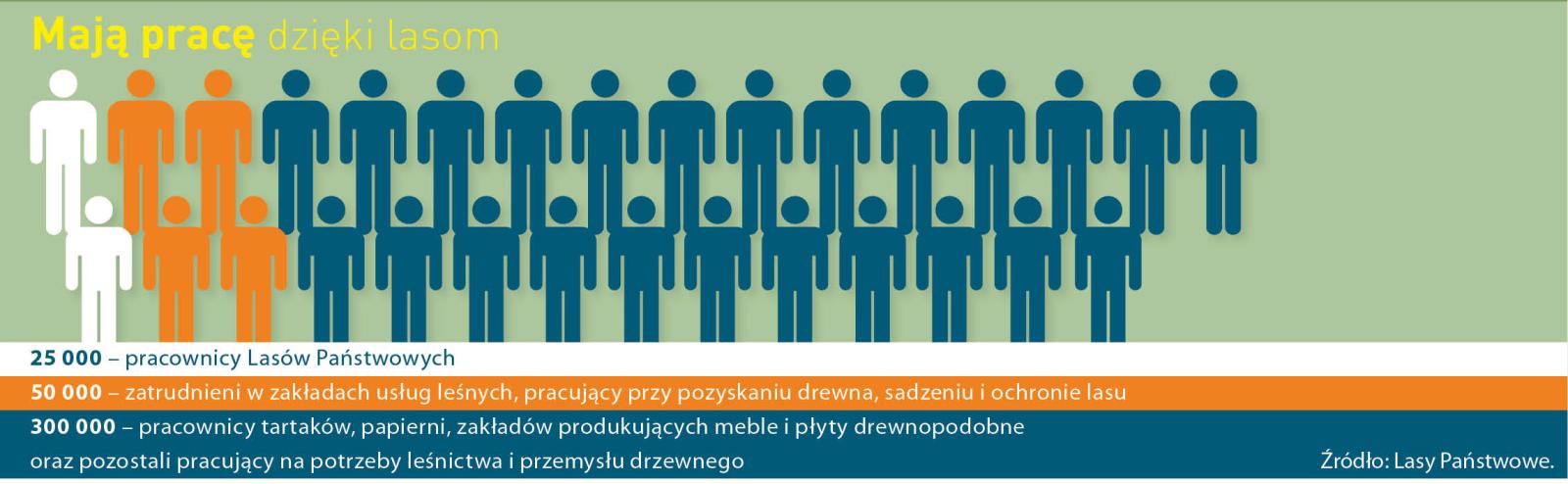
The State Forests belong to the leading group of employers in Poland. However, both forest and timber provide for workers with several thousand of Forestry Services Companies, which within the contract of mandate deal with, among others, planting trees and their nursing, wood logging and its transportation. And above all cooperate with people employed in several dozen thousand of companies creating wood and furniture industry and paper manufacture. Summing up, it gives as many as 375 thousand of Poles altogether. Statistically, every hundred inhabitant of our country works in the sector connected with forestry and wood processing.
Among private companies of forestry and timber based sector, there are also big companies with the share of foreign capital , and big and medium sized indigenous companies, but 9 of 10 companies in this sector are small plants employing less than 10 people. These are often family companies, cultivating multigenerational traditions connected with forestry and working in less developed regions of the country. There, forestry and wood industry, as well as agriculture constitute the basis of maintaining hundred thousand of families. As many as 600 % of all working places in the forest and wood based sector are located within rural areas.
Forest and wood based sector works out about 2 % of Polish GDP (Gross Domestic Product).
- 2 % of Polish GDP works out forest and wood based sector .
- Poland takes 4 place as the largest furniture exporter and 10 place as the largest producer of furniture.
- 50 % of paper and 9 of 10 pieces of furniture produced in Poland is exported abroad
- The value of annual export of Polish goods of wood and furniture industry and paper manufacture equals 45 billion zl (it is 10 % of the whole export).
- 30 billion zl , as direct foreign investments, have been drown since 1990 by Polish wood based sector (5,5 % of all).
- 100 kg of paper is used annually by statistic Pole (an average of UE is 160 kg, for USA – 230 kg).
Source: E. Ratajczak „Potencjał gospodarczy przemysłów opartych na drewnie i perspektywy ich rozwoju (Economic performance of wood – based industries and perspectives of their development)", GUS, Warszawa 2012.
Asset Publisher
Odbiór prac urządzeniowych w Nadleśnictwie Gubin wraz z ZLW
Odbiór prac urządzeniowych w Nadleśnictwie Gubin wraz z ZLW


Wczorajsze spotkanie (26 maja 2026 r.) to kluczowy moment dla przyszłości lasów w regionie Gubina. Odbiór prac urządzeniowych z obecnością Zespołu Lokalnej Współpracy to bardzo praktyczny etap tworzenia nowego Planu Urządzenia Lasu (PUL) dla Nadleśnictwa Gubin na kolejną dekadę.
PUL to swoisty „konstytucyjny” dokument dla każdego nadleśnictwa, określający, które fragmenty lasu zostaną objęte szczególną ochroną, a także, gdzie, ile i w jaki sposób można pozyskiwać drewno oraz które obszary wymagają odnowienia.
Podczas spotkania przy stole usiedli nie przypadkowi ludzie, ale kluczowi specjaliści, z których każdy pełnił ściśle określoną funkcję:
• BULiGL Oddział w Poznaniu (Biuro Urządzania Lasu i Geodezji Leśnej): To wykonawcy, czyli eksperci, którzy ostatnie miesiące spędzili bezpośrednio w naszych gubińskich lasach, prowadząc tam intensywne prace terenowe. Przechodząc piechotą każdy fragment lasu, przemierzyli mnóstwo kilometrów. Przeliczyli drzewa, zbadali gleby, ocenili stan zdrowotny lasu i na tej podstawie przygotowali projekt nowych planów gospodarczych. Wczoraj prezentowali efekty swojej wytężonej pracy.
• ZLW – Zespół Lokalnej Współpracy: Na tym etapie to relatywnie nowa i niezwykle ważna praktyka w Lasach Państwowych. Jego celem jest włączenie w proces decyzyjny strony społecznej, jeszcze zanim dokumenty zostaną ostatecznie „wyryte w kamieniu”.
• RDLP w Zielonej Górze (Regionalna Dyrekcja Lasów Państwowych): Organ nadzorujący. To dyrekcja ostatecznie zatwierdza i koordynuje cały proces na poziomie regionalnym, dbając o to, by plany były zgodne z nadrzędną polityką leśną i przepisami prawa ochrony środowiska.
• Nadleśnictwo Gubin: Gospodarze terenu. To leśnicy z Gubina będą przez najbliższe 10 lat realizować te założenia w praktyce. Ich rola polegała na weryfikacji, czy propozycje BULiGL odpowiadają realiom panującym w gubińskich lasach.
Podczas tego spotkania omawiano między innymi:
1. Lasy o zwiększonej funkcji społecznej: Wyznaczenie stref wokół Gubina i mniejszych miejscowości, gdzie priorytetem jest rekreacja, turystyka i estetyka krajobrazu, a nie produkcja drewna.
2. Ochronę przyrody: Konsultowanie planów gospodarczych w rejonach cennych przyrodniczo, m.in. na obszarach Natura 2000.
3. Gospodarkę wodną: W obliczu zmian klimatycznych kluczowym elementem PUL jest retencja wody w lasach.